



CropLife Leads the Smart Tech Revolution
 Agriculture’s digital journey has reached an in-flection point, writes editor Lara Sowinski at CropLife. As technology evolves beyond hardware, software, and equipment to more integrated, interoperable systems that leverage AI, IoT, and other technologies to connect agriculture, CropLife® is the reliable voice for navigating this shift at the retailer level.
CropLife is bullish on the future of Smart Tech. Indeed, the myriad challenges for production ag today — both short term and long term — make the embrace of Smart Tech an imperative for the ag industry.
For the retailer, this constitutes a shift from product-centric to service-centric business models with higher margins while emphasizing the “trusted advisory” relationships with grower-customers that is more consultative and adds value via comprehensive solutions rather than just products.
In turn, this creates new revenue streams for retailers in data services, consulting, and system integration, better forecasting of customer needs through predictive analytics, and competitive differentiation in the market as retailers become technology advisors and not simply input suppliers.
MORE BY CROPLIFE
Beyond Disruption: Earning Trust and Driving Impact in AgTech Through Grower-Led Innovation
Defining Smart Tech
Smart Tech is the evolution of precision agriculture. While precision agriculture focused on using data to make better decisions, Smart Tech goes further with interoperability and facilitating seamless data flow between different systems equipment brads, and software platforms.
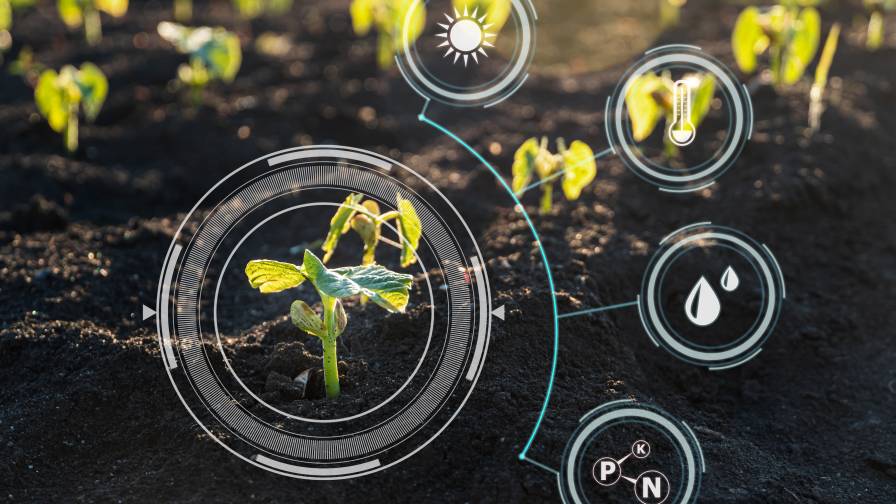


Generative AI is creating new content, solutions, and insights with predictive and prescriptive analytics capable of forecasting outcomes and recommending specific actions. Research and development on new seed varieties and active ingredients, for instance, is becoming increasingly faster and less costly.
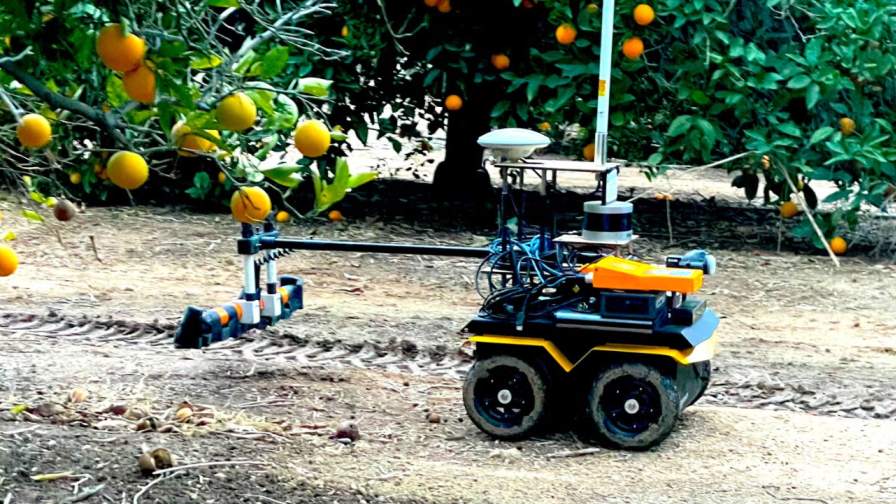
On the machinery and equipment side, Smart Tech is supporting machine learning and embedded intelligence that can make autonomous or semi-autonomous decisions.
Smart Tech in Action
In this month’s issue of CropLife there is an article on sprayers and spot spraying technologies like John Deere’s See & Spray.
A few examples of how and where ongoing developments in AI, machine learning, and deep learning will improve sprayer technology over the next few years include:
Faster real time processing. The growing adoption of edge computing will lead to the development of small, efficient computer-vision applications that can run on low-power devices.
For sprayers, this means faster decision-making directly on the equipment without relying on cloud connectivity, reducing latency from milliseconds to microseconds, and enabling operation in areas with poor cellular coverage. Edge AI will also enable sprayers to maintain full functionality even when disconnected from networks, critical for remote field operations.
Generative AI integration. In 2025, advancements will focus on leveraging generative IT and vision multimodal models to expand the capabilities of computer vision. This could enable sprayers to generate synthetic training data for rare weed species or unusual field conditions, improving recognition accuracy in diverse environments.
Going beyond visual recognition. Future spraying systems will integrate multiple data sources — combining computer vision with soil sensors, weather data, satellite imagery, and historical field performance — to make more informed spraying decisions. This holistic approach could improve accuracy from current 90% to 95% levels to 98%-plus precision.
Predictive analytics. AI systems will move beyond reactive weed detection to predictive weed emergence mapping, allowing for proactive treatment strategies rather than purely responsive ones.
While Smart Tech portends widespread changes for the agriculture industry, the impact and opportunities extend downstream throughout the food, feed, fuel, fiber value chain to food manufacturers, processors, logistics providers, exporters and others, enhancing regulatory compliance, food safety and security, transparency, and product integrity.
Subscribe Today For