



Ecorobotix Launches 10 New Plant Detection Models
Ecorobotix announces its 2027 plant detection model lineup: from March, growers will have access to 10 new commercial models, including garlic, leek and potato, and can test 55 upcoming models for free, such as pepper, zucchini and yellow nutsedge. ARA™ now offers more than 120 recognition and treatment models.
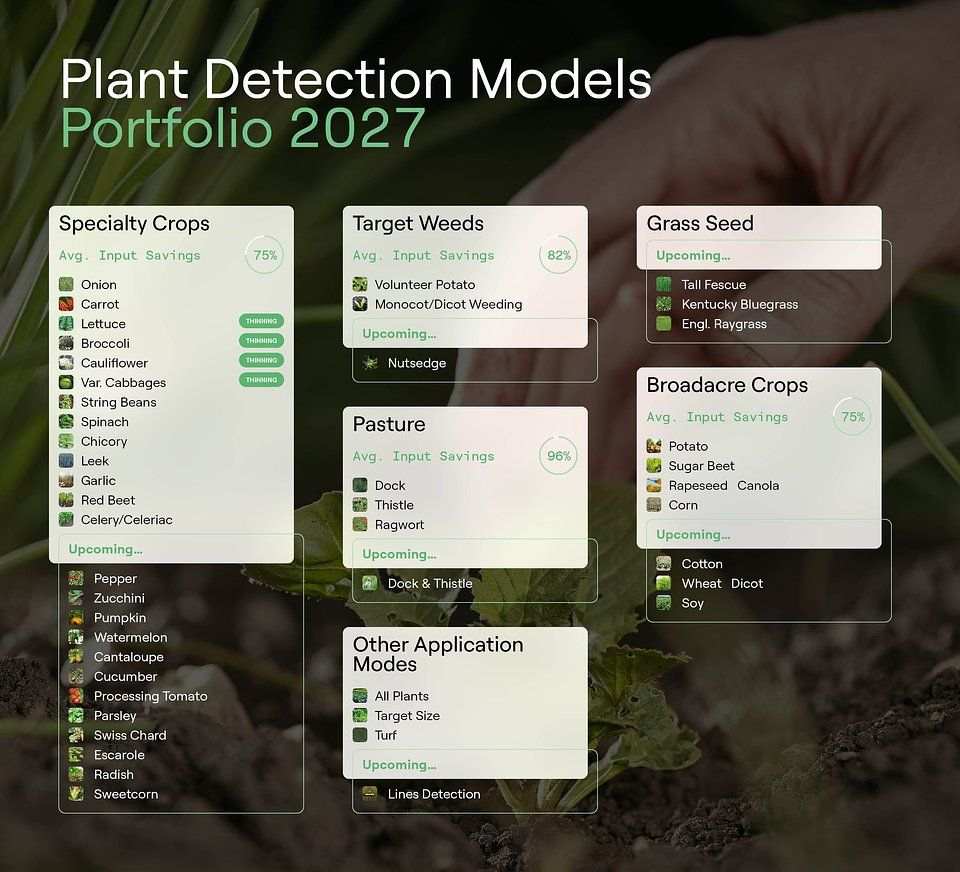
The 2027 plant detection model lineup brings 10 new commercial models to the ARA ultra-high precision sprayer, with 55 upcoming models free for growers to test.
In 2026 alone, Ecorobotix together with its customers tested the crop models that have now reached commercial status on more than 11,000 hectares in over 20 countries, with an average input reduction of 86% compared with broadcast spraying. The reliability that these models have shown over many different contexts now enables Ultra-High Precision crop care in contexts that previously only relied on broadcast spraying. Weeds can now be treated with minimal impact on soil while maximizing crop health.
Rising Up to the Challenge of Yellow Nutsedge
Yellow nutsedge is one of the most invasive and difficult-to-control weeds worldwide. Agroscope research has shown that yellow nutsedge caused yield losses of 40% to 71% in sugar beet and potato fields in Switzerland, highlighting the need for effective control measures. However, in addition to being highly invasive, it is difficult to eradicate, as common weed control methods, including selective herbicides, are often unsuccessful or unavailable.
“Yellow Nutsedge is an increasingly common problem across Europe, spreading rapidly in countries such as Germany, the Netherlands, and Switzerland, while already being well established in southern countries like France, Italy, and Spain,” says Simon Gasser, Agronomist and Crop Algorithm Product Manager at Ecorobotix. “With the development of this new algorithm, we are offering the first precision spraying solution capable of detecting Yellow Nutsedge and applying a non-selective herbicide directly to the weed without damaging the crop.”
MORE BY ECOROBOTIX
Ecorobotix Opens the Door to Ultra-High Precision (UHP) Treatment in Vegetable Farming
Australia: Ecorobotix and RDO to Introduce AI Sprayer Technology in Australia



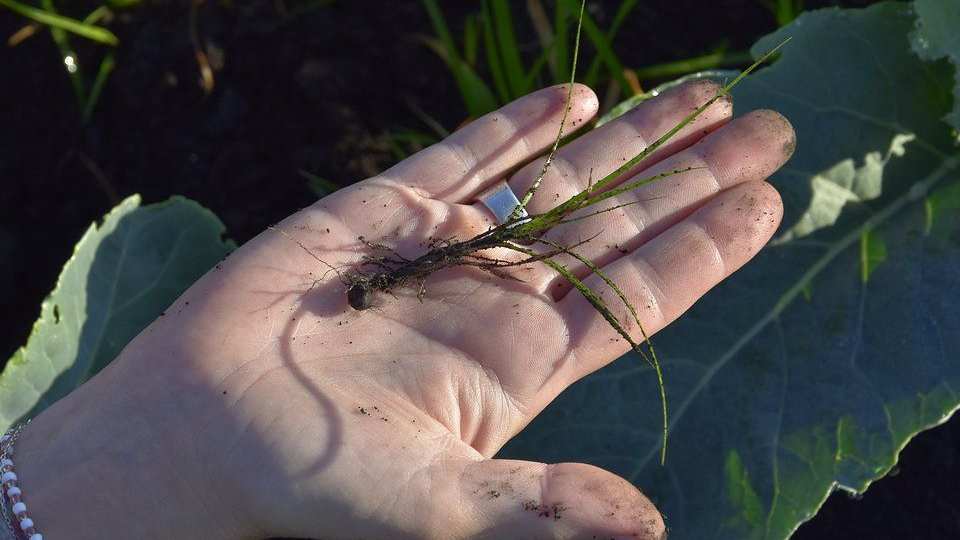
Yellow Nutsedge in a cabbage field. Photo: Ecorobotix
This innovation reflects the company’s commitment to providing farmers with solutions that address current challenges in the field. As an upcoming model, it will be available for free to ARA users in March, as are all our upcoming models.
Ultra-High Precision Weed Control in Potatoes Now Possible
The potato model, commercially available and accessible to growers in March, is one example of how Ecorobotix tests the effectiveness of its models. During development, Ecorobotix compared ARA’s weed control efficacy using the potato model with conventional broadcast spraying (Figure 1). The results demonstrated that the algorithm successfully controls common weeds present in potato crop context.
While trials like these provide valuable data, users’ feedback plays an equally important role in the development process. Luc Détroz, potato grower in Belgium, used the ARA™ potato model to control weeds across 300 hectares of potatoes on his farm.
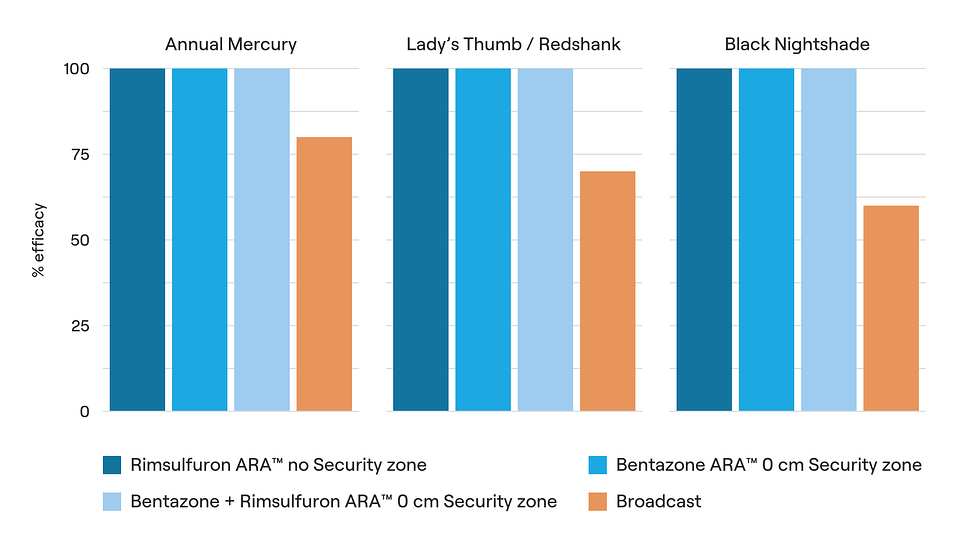
Weed Control Efficacy 20 days after treatment. Source: Trial conducted in Switzerland. Treatment stage of potato crop 10 cm high.
“This clearly saved the crop. In a single pass, we were able to control goosefoot and knotweed, and the field remained weed-free until the end,” says Luc. “Without this treatment, the goosefoot would have become overgrown and woody, which would have been very difficult to manage.”
ARA, a Well-Appreciated Partner to Growers
The 2027 crop model lineup continues the company’s mission in providing farmers with tools to address both current and emerging weed management challenges. The more than 1,000 ARAs in use worldwide and more than 600,000 hectares treated to date show the confidence our growers have in our algorithms to deliver Ultra-High Precision crop care.
Meanwhile the current carrot model has proved its worth among growers. The number of hectares treated by this award-winning model increased by more than 80%, while proving a concrete solution against the loss of metribuzin.
Subscribe Today For