



Smart Crop Mobility: Farming’s Driverless Future
Picture a farm at 4 a.m., long before sunrise, where a driverless tractor is already rolling through the rows, guided by satellite precision and a camera system that can spot a single weed among thousands of soybean stalks. No headlights needed for a human operator, because there isn’t one. This isn’t a concept video from a trade show — it’s a scene playing out on real farms right now, and it’s becoming less rare by the season.
The category behind this shift is often called smart crop mobility: a mix of autonomous tractors, robotic harvesters, agricultural drones, and field robots designed to move through farmland and perform tasks with minimal human input. What started as a niche experiment for a handful of well-funded growers is quickly turning into a mainstream investment decision for farms of every size, from sprawling grain operations to small vegetable plots measured in hectares rather than square miles.
Why Farms Are Turning to Autonomous Mobility
The Labor Problem That Won’t Go Away
Ask almost any farmer what keeps them up at night, and staffing shows up near the top of the list. Rural populations are aging, younger workers are gravitating toward cities, and seasonal labor pools have grown thinner and less predictable in many parts of the world. Planting and harvest windows don’t stretch to accommodate a labor shortfall — crops ripen on their own schedule. Autonomous equipment doesn’t get tired, doesn’t need a visa sponsor, and doesn’t call in sick during the two-week window when a crop absolutely must come out of the ground.
Precision Agriculture Meets Physical Automation
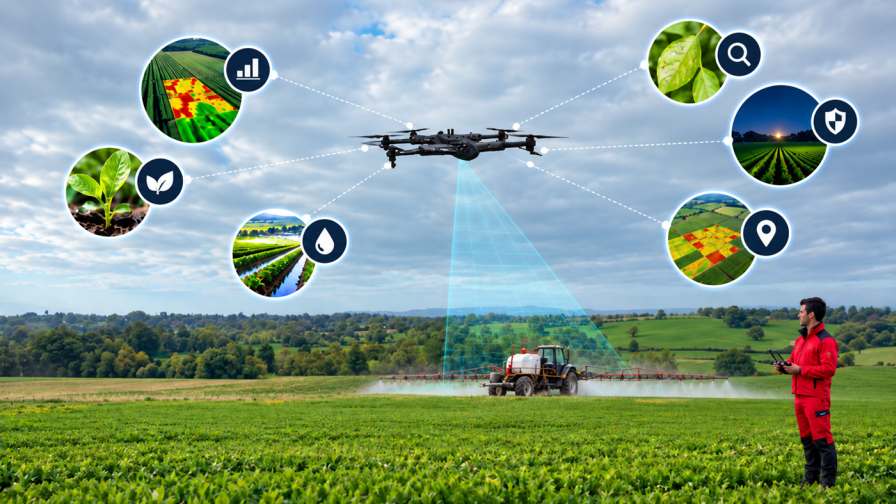
For years, precision agriculture largely meant better data: soil sensors, satellite imagery, yield mapping. The missing piece was getting a machine to act on that data without a person behind the wheel translating it into steering and throttle inputs. Smart mobility platforms close that gap. A sprayer that knows exactly which few square meters need herbicide, and treats only those spots, isn’t just efficient — it cuts chemical use, protects margins, and reduces the environmental footprint of the operation. That combination of cost savings and sustainability is proving hard for growers to ignore.
MORE BY GLOBAL MARKET INSIGHTS
Revolutionizing Agriculture: Micro-Irrigation System Market to Surpass USD 25.1 Billion by 2034
Growth in Precision Agriculture: Fruit Thinning Robots Market to See Significant Growth by 2032
Policy Support Is Accelerating Adoption
Governments have noticed that food security and rural economic stability are tied to how quickly farms can modernize. Subsidy programs, digital agriculture missions, and pilot initiatives are popping up across multiple regions, often aimed squarely at offsetting the upfront cost of autonomous equipment. This kind of policy backing doesn’t just help individual farmers buy machinery — it signals to manufacturers that demand will be durable, which in turn justifies further R&D investment.

What “Smart Crop Mobility” Actually Covers
The category is broader than most people assume. It spans:
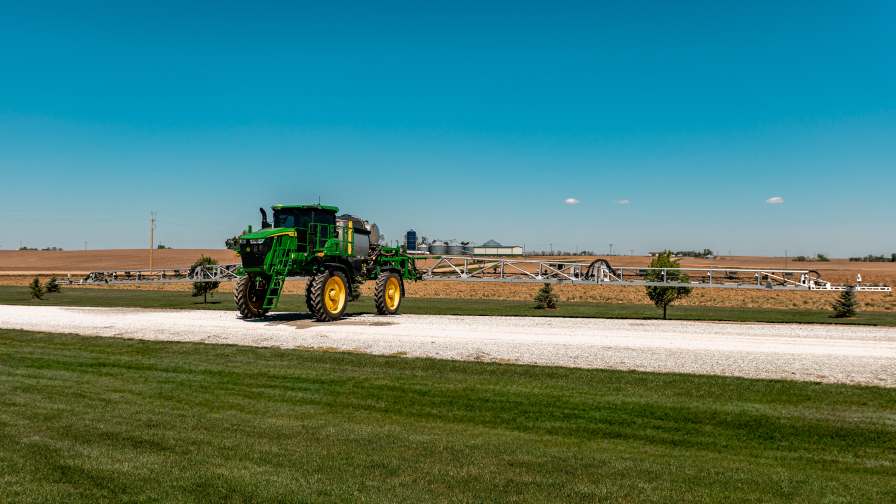
- Autonomous tractors that handle tillage, seeding, spraying, and hauling with GPS-guided navigation and increasingly sophisticated obstacle detection
- Robotic harvesters built to pick delicate fruit or cut grain with minimal crop damage
- Agricultural drones used for scouting, spraying, and mapping fields from above
- Field robots designed for narrower jobs like weeding, seed placement, or crop monitoring
Autonomous tractors currently anchor the category, largely because they’re multi-purpose. A single autonomous platform can plow in spring, spray in summer, and haul in fall, which makes the return-on-investment math far more favorable than a machine built for one task alone. Robotic harvesters, meanwhile, are advancing fastest in specialty crops like fruit and vegetables, where selective, damage-sensitive picking is genuinely hard to automate and correspondingly valuable once solved.
The Small-Farm Surprise
Conventional wisdom might suggest that only massive commercial operations could justify the cost of robotics. In practice, smaller farms — those working under roughly 50 hectares — have become a major force in this market. Fragmented landholdings, common across much of Asia and parts of Europe, don’t need giant, high-horsepower machines. They need compact, lightweight, multi-functional equipment that can maneuver in tight spaces and switch tasks easily.
This has pushed manufacturers to rethink their product roadmaps. Instead of scaling existing large-farm technology down, several companies are designing purpose-built compact platforms from the ground up, often paired with flexible financing so a smallholder doesn’t need to make a six-figure capital outlay just to access the technology.
Technology Driving the Next Wave
Sensor Fusion and AI Navigation
Modern autonomous equipment increasingly relies on a blend of GPS, LIDAR, radar, and computer vision working together rather than any single sensor doing the heavy lifting. This fusion approach lets machines navigate uneven terrain, detect obstacles like people or animals, and adjust course in real time — capabilities that were far less reliable just a few years ago.
Connectivity and Fleet Management
Autonomous machines rarely operate in isolation anymore. They’re typically networked into farm management software that tracks fleet location, task progress, fuel or battery status, and maintenance needs from a single dashboard. This turns a single robotic tractor into one node of a coordinated system, which matters a great deal once a farm operates more than one autonomous unit at a time.
Alternative Powertrains
Electrification and hybrid power systems are gaining ground, particularly for compact equipment used in orchards, vineyards, and greenhouse operations where noise and emissions matter more than raw horsepower. Battery-electric platforms also pair naturally with autonomy, since electric drivetrains are easier to control precisely than diesel engines.
Business Models Are Shifting Too
Perhaps the most consequential trend isn’t technical at all — it’s financial. Ownership is giving way to access. Robotics-as-a-Service and pay-per-acre arrangements let farmers use autonomous equipment during the exact windows they need it, without carrying the full capital cost, depreciation risk, and maintenance burden year-round. For equipment makers, this creates recurring revenue instead of one-time sales, which is a far more resilient business model when commodity prices swing and farm income becomes unpredictable.
Challenges Still Standing in the Way
None of this is friction-free. Total cost of ownership remains a genuine barrier for smaller and marginal farmers, even with financing options improving. Regulatory frameworks for autonomous equipment also vary considerably from country to country — certification standards, safety approvals, and liability rules haven’t caught up uniformly with the technology, which slows cross-border commercialization for manufacturers trying to scale a single platform globally. Reliability in unpredictable field conditions, from mud to dense foliage to erratic weather, also continues to test even the most advanced systems.
Where the Competitive Landscape Stands
The competitive field blends long-established agricultural equipment manufacturers with newer robotics-focused entrants and drone specialists. Established players bring deep dealer networks, manufacturing scale, and decades of farmer trust, while newer companies often move faster on niche, task-specific automation. Strategic partnerships between hardware manufacturers, AI software developers, and sensor companies are becoming the norm rather than the exception, since no single company tends to hold every piece of the technology stack in-house.
Looking Ahead
Smart crop mobility is moving out of the pilot-project phase and into everyday farm operations. As reliability improves, costs decline, and service-based access models spread, autonomous equipment is likely to become less of a novelty and more of a standard line item in farm planning, much like tractors themselves did a century ago. The farms best positioned to benefit won’t necessarily be the largest ones — they’ll be the ones that find the right mix of technology, financing, and task-fit for their specific land and crops.
Key Takeaways
Autonomous farm equipment is no longer an experimental luxury reserved for a handful of mega-farms. Labor shortages, precision agriculture demands, and supportive government policy are pushing adoption across farm sizes, with smaller and fragmented landholdings emerging as an unexpectedly important growth segment. Technology is advancing on multiple fronts at once — navigation, connectivity, and power systems — while service-based business models are lowering the barrier to entry. Real challenges around cost and regulation remain, but the overall trajectory points toward autonomous mobility becoming a foundational part of how food gets grown.
Subscribe Today For