



UK Firm Takes Leading Role in Cutting-Edge Farm Robots Project
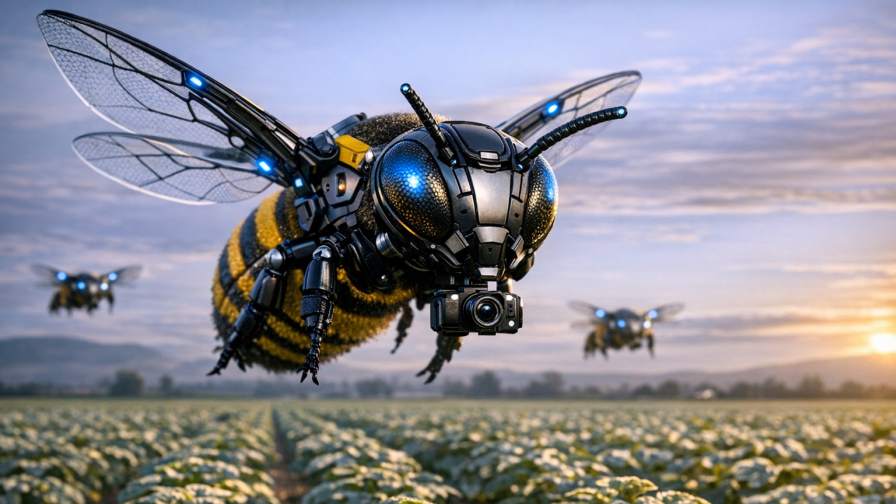
Robotic bees will be constructed as part of the FARMAR project. This image has been generated using AI.
Innovators from a leading engineering company have been appointed industry partner to a global project that could see bee drones and robotic moles dispatched to working farms.
Cumbria-based Forth UK is a vital part of FARMAR – an innovative global project translating traditional farming knowledge into intelligent robotic systems to support modern agriculture.
FARMAR’s full title is ‘Farmer-in-the-loop heritage-aware AI and Robotic Mechanisation for Agricultural Resilience’. The four-year international collaboration starts in October.
Forth CEO Mark Telford said: “Our focus is on unlocking new opportunities for West Cumbrian SMEs, drawing on the pedigree forged at Sellafield. It’s this experience that makes Cumbria’s businesses some of the strongest contenders to meet global challenges head on.
“Forth is perfectly placed to be involved with FARMAR. It’s a tribute to the skills of our team that we’ve been chosen as an industry partner for such a cutting-edge project. And it’s great to be involved in something of such global significance.
“FARMAR could change the way farming works around the world, improving sustainability and efficiency. It aligns with Forth’s approach to problem-solving: innovate, test, create.”
FARMAR will combine artificial intelligence, robotics, crop science and farmer expertise to support the transition towards more sustainable, resilient and efficient agricultural systems.
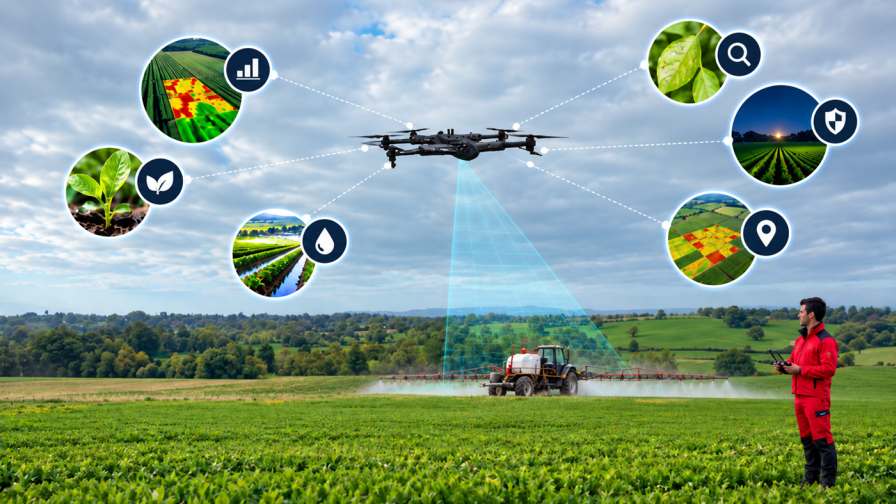
Smart ground and aerial robots that learn directly from real farming practices will operate in live farm environments.
Forth will make prototypes of the technology, working with partners across the UK, Europe, Asia and North America.
On each site, farmers will show and explain their routines. Short demonstrations and spoken narrative notes will be turned into step-by-step instructions that robots can follow.
A small on-site computer will coordinate teams of lightweight ground vehicles and drones that scout fields, flag issues and carry out tasks under strict safety limits and with human oversight. A simple app will allow farmers to review and adjust the robots’ work.
Experts in technology, agriculture, economics and social sciences will focus on innovations that benefit farmers, while respecting data, legal and cultural considerations.
FARMAR aims to help farms respond to challenges in modern agriculture, including labour shortages, climate shocks and rising costs, by turning everyday know-how – and the local heritage of how fields are walked, weeds are managed and crops are cared for – into practical and safe automation.
By embedding cultural context into modern technologies, the project seeks to strengthen productivity, sustainability and community identity within small farming systems.
Trials will compare FARMAR-assisted work with current practice to fully evaluate the outcomes.
Forth is a specialist engineering company delivering smart, practical solutions for the world’s most challenging and safety-critical environments.
For more than 25 years it has been developing innovative systems for highly regulated industries, combining technical expertise with hands-on problem-solving.
It has a track record in creating, developing, and manufacturing bespoke, purpose-built solutions, to help remove the need for humans to work in hazardous environments.
Forth’s pioneering technologies have accelerated nuclear decommissioning projects, enhancing operational safety and significantly reducing costs.
Forth also provides innovative and reliable engineering for sectors including the oil and gas industry, renewable energy and water infrastructure, with advanced robotic inspection and maintenance technologies.
The FARMAR project has been awarded €1.79 million (about £1.5 million) through the international Horizon Europe programme, which includes UK Government funding. The project will be coordinated by Durham University’s Department of Computer Science.
Subscribe Today For