



AquaSpy Rebrands as UnderGround Weather, Introducing the World’s First AI Soil Intelligence Reporting Engine
AquaSpy, an agtech company that builds continuous, multi-depth in-soil nitrate and moisture sensing, has announced it is rebranding as UnderGround Weather and launching a new category of soil intelligence, giving growers the same continuous visibility into conditions below the surface that they have long had above it.
Built on nearly two decades of underground sensing, UnderGround Weather replaces point-in-time soil sampling with a continuous, multi-depth view of the root zone — tracking nitrate and the other conditions that drive nutrient availability as they shift through the season.
Until now, agronomists have relied on a combination of soil sampling, field observations, weather data, and experience to understand what is happening below the surface. UnderGround Weather creates a continuous view of the underground environment, helping growers and advisors see how nutrients, moisture, oxygen, temperature, and biology change throughout the season.
“For nearly two decades, we’ve helped growers see what’s happening beneath their fields,” said Bruce Moeller, CEO. “Calling it UnderGround Weather names what we’ve long believed: the root zone has its own weather, and growers deserve to read it as clearly as they read the sky.” As part of the rebrand, the company also introduced UnderGround Weather Reporter™, the world’s first AI soil intelligence reporting engine.
MORE BY UNDERGROUND WEATHER
TEAL Partners With AquaSpy to Revolutionize Crop Monitoring With Advanced IoT Connectivity
AquaSpy Releases Industry’s First Yield Correlated Study Comparing Thousands of Growing Fields
UnderGround Weather Reporter automatically analyzes underground measurements, weather conditions, soil characteristics, crop activity, and management events to generate concise reports explaining what is happening in the root zone, why it matters, and what actions deserve attention.

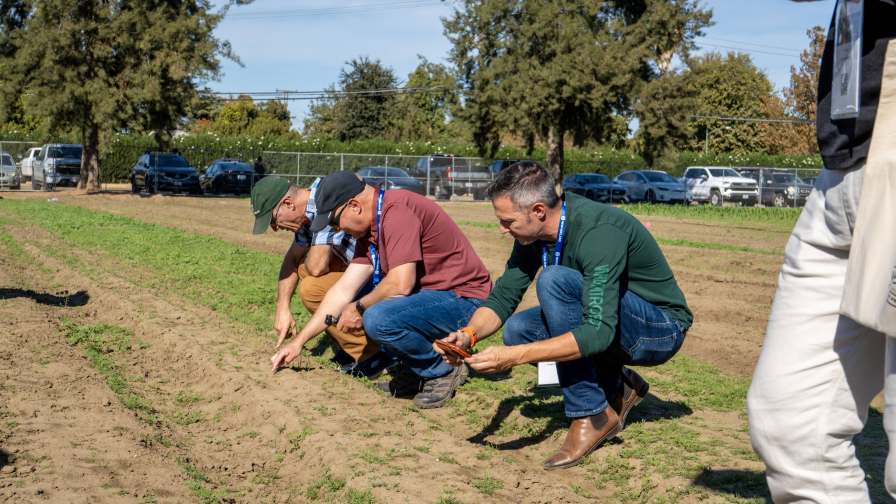


UnderGround Weather is powered by Crophesy™ LS-N, which continuously measures nitrate, oxidation-reduction potential (ORP), moisture, salinity, and temperature throughout the root zone. These direct measurements provide the foundation for AI-powered interpretation and recommendations. This physical AI approach provides intelligence grounded in real, multi-depth measurement inside the soil rather than models or imagery alone.
“Most agricultural AI begins with assumptions and models,” Moeller said. “UnderGround Weather Reporter begins with direct measurement. First, we measure reality. Then AI helps explain what it means.”
The launch follows deployment of the technology across more than 900 nutrient management subscriptions spanning multiple crops, growing regions, and countries. UnderGround Weather is built on billions of underground measurements collected through nearly two decades of field experience.
The company believes the introduction of UnderGround Weather represents a shift from periodic soil monitoring toward continuous underground intelligence.
“Growers have weather reports. Agronomists have soil samples. What has been missing is a way to continuously understand how underground conditions are changing between those moments,” Moeller said. “That’s the gap UnderGround Weather is designed to fill.”
Subscribe Today For